
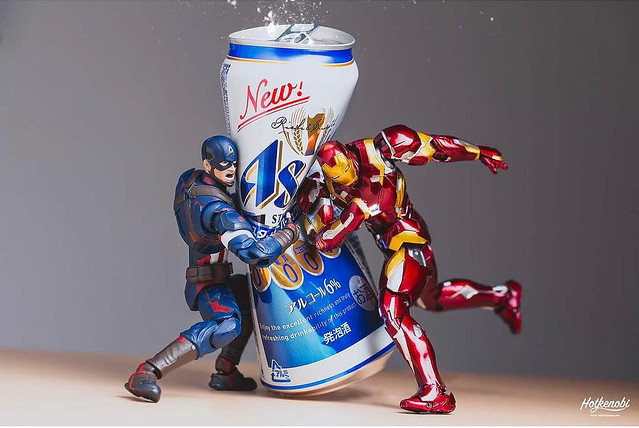
Malts with Superpowers…

The current craft beer scene has it’s focus on hops, these are the celebrities of today’s beer. But behind every great hop there has to be a great malt base!

A great beer is more than just aroma. The first thing that a customer assesses about a beer is it’s appearance and that is shaped by the malt bill. Whether you are looking for clarity or murky haziness, a brim full glass or a deep long lasting head these aspects come from the malt (and/or adjuncts) which form the grist. The range of malts available to us today is a veritable kaleidoscope
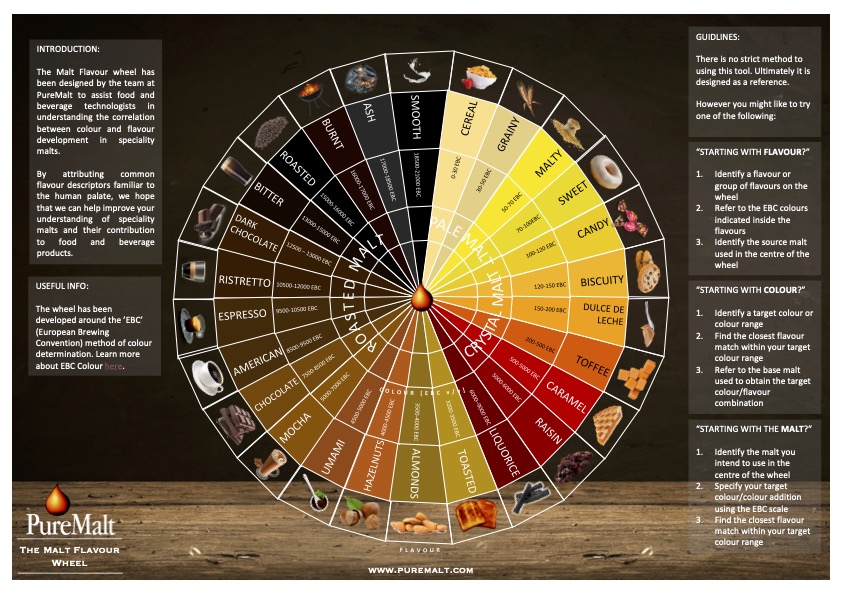
PureMalt Flavour Wheel

There is such a breadth of flavour options there, but the topic for this post are the less obvious characteristics which we can use to impact the more subtle but equally important aspects of our beer design.

Clarity or Haze…

The current trend in the UK is for hazy IPA’s. Permanent haze in beer comes mainly from protein-polyphenol complexes or beta-glucan and related polysaccharides. But you need the right protein, not just any protein. Here you should be looking at malted wheat. Torrified wheat has a high haze potential, but being ‘less-modified’ the protein fraction is of a larger molecular weight which tends to drop out with time. To further aid the haze and to give that ‘pillowy softness’ then use some malted oats which contribute beta-glucan / polysaccharides to achieve these effects. Don’t go crazy with the amount you use however as the lack of husk on the wheat or the beta-glucans in the oats could make for a very slow run off from your mash tun.

What if your aim is a beer of the ultimate clarity? This is probably best achieved by good water chemistry, careful optimisation of your boil time, kettle and auxiliary finings. But if you are working at the micro scale then finings optimisation trials are not always an easy option. Did you know that the major source of the polyphenols behind haze is the base malt, not the hops? Crisp offer a malt which they call ‘Clear Choice’ which is malted from a unique variety of barley which is free from the class of polyphenols which help form haze complexes. For an easy option at the small scale this could be something to consider.

Body

One of my earlier posts  covers the various ways you can control the body of your beer. There’s no point repeating all that here just head to my post on bodybuilding. Suffice it to say that wheat and oats are again good choices, and if you are making a Stout consider some Munich malt which adds both body and some lovely complexity to the malt base.

Colour

Clearly the range of differently roasted malts offer a full palate of colour options for your beer. But what if you want to add the colour without the flavour? Here I’m thinking about something like a Red Ale or a Black IPA. Here Black Malt is your friend, but don’t add it to the mash, spread it over the top of the mash bed just before you start sparging – in this way you get a lot of the colour and very little of the flavour extracted.

Another related trick is needed if you want to make a lager that looks and tastes like it has been made via the traditional decoction method, but when you don’t have the kit or the patience to use this approach. The boil stage of decoction promotes the Maillard reaction yielding melanoidins. A similar effect can be achieved used a small proportion (2%) of Melanoidin malt within your malt bill. Here the melanoidins have been formed during the roasting process

Finally, if you want to get the colour and flavour from a roasted malt without the astringency then consider some dehusked malt such as one of the Carafa Special grades from Weyermann or Blackprinz from Breiss. Many of the polyphenols in barley is within the husk, if it’s not there it cannot impart the astringency. Also important with a stout is to get your pH right by adding some bicarbonate to a Stout Grist to keep the pH up to around 5.4. Dark roasted malts, rich in acidic melanoidins will reduce the pH in the mash and reduce your extract efficiency unless you correct for this.

Sweetness

Crystal / Cara malts are made via a different process to regular malts. Rather than being drying directly after malting, they are heated to a comparable temperature in a sealed drum so that they are ‘stewed’ before drying and roasting. This starts the saccharification process and the sugars become caramelised during the drying / roasting stages. A whole range of colour options exist. The most crushable hoppy beers of today have a backdrop of subtle sweetness to bring out the best of the fruity flavours from the hop oils. Pale Cara malts (15-25 EBC) are used to achieve this. Hops might seem to win all the Oscars, but Cara malt should win a gong for the Best Supporting Role.

For malt forward beers where sweetness is also important, some of the darker Crystal malts come into their own. These give toffee (Crystal Pale / 150) or caramel and dried fruit (Dark Crystal / 400) flavours to both traditional and modern porters and stouts. What did you think put the popcorn into Northern Monkey’s Film Club?

In everything, moderation

Finally don’t forget the most important superpower of all, and that is the enzymic power within base malts which turns the starch into sugars – the source of our alcohol. Enzymes are delicate and high temperatures denature them. Both roasted and crystal malts no longer contain functional enzymes so have no diastatic power. Thus when using these malts never use more than 10% of each and always have at least 70% of base malt within the grist. The two exceptions here are Vienna and Munich malts which retain enough diastatic power to be used at up to 100% of the malt bill, so these can be counted towards your 70% too.

More help?

Would you like a beer recipe designed for you, and even made at pilot scale for you to try? I can offer both of these services and very soon I will have the AWRS licence required for you to test out your new brew on your own customers for their feedback because launching into a full scale batch. If either of these are of interest, just give me a call.
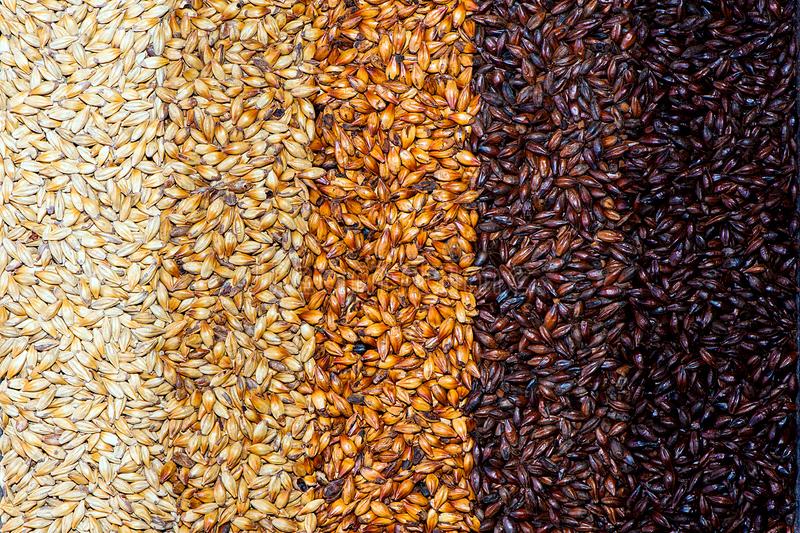
Malt colour-gradient

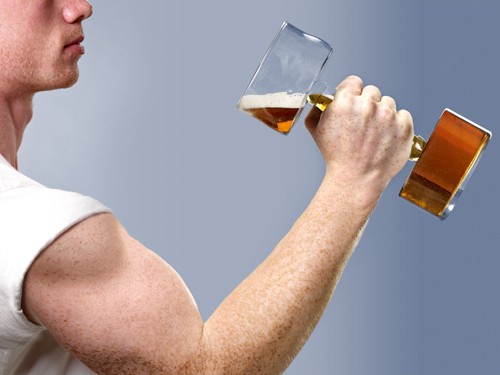
Body building – tuning the mouth feel of a beer by design.

The body of a beer makes a big difference to the drinking experience. The amount of body that you target depends on both the style and the drinking audience you are aiming for, but for an excellent beer it needs to fit the style. The beauty of the brewing process is that there are a very wide range of variables you can play with to adjust the body of your beer.

There is a view, to which I also subscribe, that the ideal craft beer will taste as if it is 5% ABV. That means that our beer design may be seeking to increase the body of a low ABV example but reduce the body in an imperial stout. It’s like going to the gym, some people are there to increase their tone and muscle bulk, others are looking to shed a few pounds.

What is body?

This is the first thing to understand, because when you, the rationale behind the process variables that influence it become clear. Predominantly the body of a beer (or any beverage) is related to the viscosity. Viscosity, for those who are interested, is the resistance to flow within a liquid. Think of water at one end of the range and honey at the other. Other key factors that influence how we perceive the body of a beer are the sulphate:chloride ratio and the level of carbonation. These factors are important but are secondary to the viscosity.

So what influences the viscosity of beer?

Simple, the higher the amount of dissolved solids and the higher the molecular weight of those solids the higher the viscosity of the beer. Considering a 4.4% European Pilsner for example; we would expect around 3% unfermented sugars and 0.3% protein to be the major dissolved solids. It is worth remembering that the molecular weight (MW) of the proteins present could easily be 10-20 times higher than the unfermented sugars, so their effect will be higher than their concentration seems to suggest.

INCREASING BODY

We could simply increase the ABV, because as this rises so does the total sugar content of the wort. Whilst the relative percentage of unfermentable sugars remains the same, their absolute level rises. Thus the higher body we generally experience in stronger beers.

But let’s say we are looking to make a session beer at 3.7% but we don’t want it to taste watery, what options do we have?

  • Careful choice of the malt bill

  • Add an adjunct that contains higher molecular weight proteins

  • Select the best mash temperature

  • Consider a step mash

  • Use a lower attenuation yeast

  • Use a lower sulphate:chloride ratio in your brewing salt addition/s.

  • Add lactose

Malt choice

This is one of the two most powerful tools you have open to you, the other being your choice of yeast. Crystal malts are commonly used to increase the body of a beer, their unique malting process leads to caramelised sugars being present in the malt itself. If you don’t want to also add strong flavours then choose a lightly kilned version – often called Cara malts, these will add a little sweetness but not the stronger caramel or dried fruit flavours of the darker crystal malts. Note that crystal / cara malts have a very low enzymic potential so should only be used at < 10% of the total malt bill. Another option is Munich malt but this has a higher flavour potential so is often best used in darker beers where it’s maltiness will be a welcome layer of flavour rather than a distraction.

Lower Attenuation Yeast

An alternative to putting more body in is to take less out! Lower attenuation yeasts such as Fermentis S-33 or Lallemand BRY-97 are more selective in the sugars they convert and thus leave more behind the final beer. If you use one of these you may want to do something counter-intuitive with your mash temperature so your final gravity is not too high and that is to mash in at a lower temperature (i.e. 65 C).

Adjuncts

It is common to add oats or wheat to increase the body of the beer. Be careful with the level you use though. Both adjuncts contain larger molecular weight proteins, some of which will be left, like a sludge, in your mash tun. High levels will also lead to a lack of haze stability, which can be a problem or an advantage depending on the style you are aiming for. Oats also add beta-glucans and other viscous polysaccharides to the beer, but if you add too many, the viscosity of your mash will rise and increase your sparge / run off times or may lead to a stuck mash. The lack of husk on malted wheat can also lead to similar problems albeit via a different route. If you are using as mash tun, then add your wheat to your grist hopper towards the end so the wheat does not sit directly above the plate.

If your brew kit allows for a step mash, then it is possible to extract more of the medium molecular weight proteins from these adjuncts by including a protein rest. This breaks down the problematic high MW proteins (less sludge) to form more of the ‘body building’ medium MW proteins which are wanting to move forwards in the process.

Mash temperature

A subtle change here can have a significant effect on your final beer. You have competing enzymes in your malt and at higher temperatures α-amylase wins out leading to a higher level of more complex, lower fermentability sugars and with this, more body.

Adjust your brewing salts

Higher relative levels of chloride in a beer are known to increase the perceived body. With something like a Stout you would want higher chloride levels anyway to bring out the lovely malt flavours. A less obvious example of this approach is with NEIPA’s. Whilst these beers have a very high hop level, the style demands a lower bitterness and also uses low colour malts so there is little or no malt character to be enhanced. NEIPA’s are commonly made with a 1:2 – 1:3 sulphate:chloride ratio.

Add Lactose

Finally, you could simply add a non fermentable sugar to build you body, an approach traditionally used with a Milk Stout. Lactose is a lot less sweet than sucrose but is sweet nonetheless, so be cautious in the amount you add if you take this route, start with something in the 3-7% range.

REDUCING BODY

If you are one of the mega brewers then one of your aims is to make a lager which is easy to drink, something with less body that you would expect for the ABV. This is one of the reasons why Budweiser is made with some rice within the malt bill. If you are reading this you are probably not seeking to make the next Bud Light, but the same principles apply. A beer whose body is too high is less satiable; it is something where a half might be enough. If you want to make a high ABV beer more session-able, what options do you have open to you?

  • Add an adjunct

  • Select the best mash temperature

  • Use a higher sulphate:chloride ratio in your brewing salt addition/s.

Add an adjunct

       Mash adjunct

There is no shame in using some rice within your malt bill. But you need to use it in the right form and at the right level. It is necessary for all starch sources to gelatinise (hydrate and open up ready for the enzyme action) and is it really handy that malted barley does this between 61-65 C so this happens without you having to think about it. Rice however requires 70-80 C. Mega-breweries have a separate vessel for this step, but as a micro-brewer you can buy Flaked Torrified Rice which has been ‘pre-gelatinised’ and is ready to charge into your mash tun. Something else to note is that rice has no enzymic power and very low FAN (link to definition), so needs to be partnered with barley malt to enable saccharification and yeast health. Keep the level below 25%.

       Kettle adjunct

Rice lowers body because it produces a much higher percentage of fermentable sugars than malted barley. Another approach to achieve this would be to add simple sugars directly into the copper. This is the approach used by the Belgians to make beers North of 10% ABV which do not feel like treacle. Sugar syrups, candy sugar and honey are all options. These are 100% fermentable so give you alcohol without the body.

Mash temperature

The opposite approach to body boosting applies here of course and that is to aim at a lower mash temperature to favour β-amylase and thus gain a higher proportion of fully fermentable maltose.

Adjust your brewing salts

Here your exact approach will depend on the style you are aiming for. You want to increase the sulphate:chloride ratio but the extent will depend on the style. For a malt forward beer you are likely to want to keep a modest excess of chloride – say 1:1.25 but for a double IPA you be be free to go for 3-4:1. Here you are looking for a subtle malt backbone at most and are likely to want the bitterness to balance well with what is likely to be a higher level of background sweetness.

Final comments

A commercial beer design needs to both good to drink and practical to manufacture. As you have now seen we have plenty of factors at our disposal. Which we choose to use will depend on the style being targetted and capability of the brew kit we have at our disposal. If you are want some guidance with beer design, or help with practical processing problems then please give me a call and we can arrange a phone/video consultation or, if you are based in the North West of England a site visit.