The current craft beer scene has it’s focus on hops, these are the celebrities of today’s beer. But behind every great hop there has to be a great malt base!
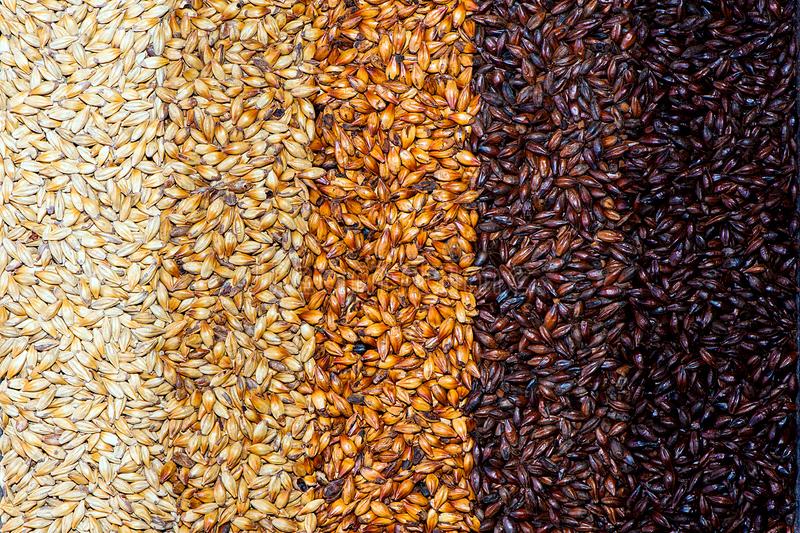
A great beer is more than just aroma. The first thing that a customer assesses about a beer is it’s appearance and that is shaped by the malt bill. Whether you are looking for clarity or murky haziness, a brim full glass or a deep long lasting head these aspects come from the malt (and/or adjuncts) which form the grist. The range of malts available to us today is a veritable kaleidoscope
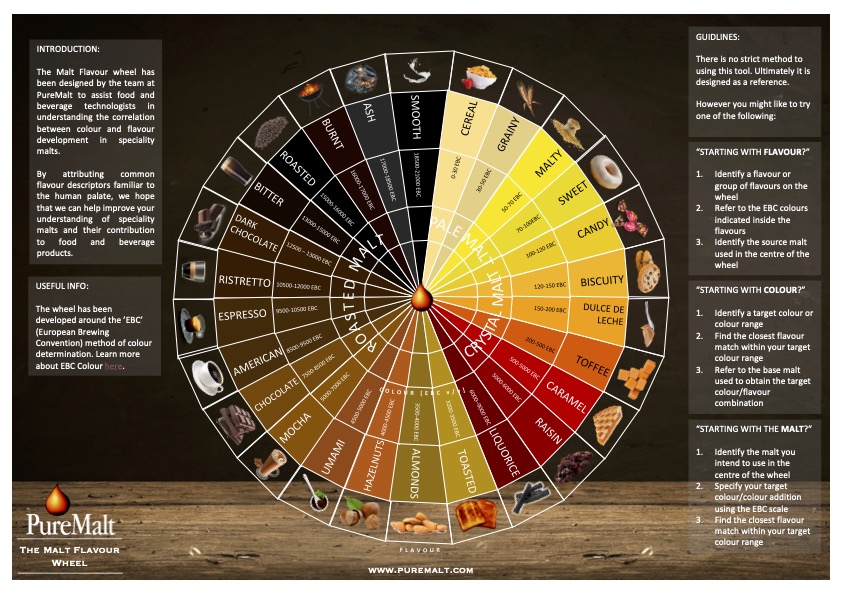
There is such a breadth of flavour options there, but the topic for this post are the less obvious characteristics which we can use to impact the more subtle but equally important aspects of our beer design.
Clarity or Haze…
The current trend in the UK is for hazy IPA’s. Permanent haze in beer comes mainly from protein-polyphenol complexes or beta-glucan and related polysaccharides. But you need the right protein, not just any protein. Here you should be looking at malted wheat. Torrified wheat has a high haze potential, but being ‘less-modified’ the protein fraction is of a larger molecular weight which tends to drop out with time. To further aid the haze and to give that ‘pillowy softness’ then use some malted oats which contribute beta-glucan / polysaccharides to achieve these effects. Don’t go crazy with the amount you use however as the lack of husk on the wheat or the beta-glucans in the oats could make for a very slow run off from your mash tun.
What if your aim is a beer of the ultimate clarity? This is probably best achieved by good water chemistry, careful optimisation of your boil time, kettle and auxiliary finings. But if you are working at the micro scale then finings optimisation trials are not always an easy option. Did you know that the major source of the polyphenols behind haze is the base malt, not the hops? Crisp offer a malt which they call ‘Clear Choice’ which is malted from a unique variety of barley which is free from the class of polyphenols which help form haze complexes. For an easy option at the small scale this could be something to consider.
Body
One of my earlier posts covers the various ways you can control the body of your beer. There’s no point repeating all that here just head to my post on bodybuilding. Suffice it to say that wheat and oats are again good choices, and if you are making a Stout consider some Munich malt which adds both body and some lovely complexity to the malt base.
Colour
Clearly the range of differently roasted malts offer a full palate of colour options for your beer. But what if you want to add the colour without the flavour? Here I’m thinking about something like a Red Ale or a Black IPA. Here Black Malt is your friend, but don’t add it to the mash, spread it over the top of the mash bed just before you start sparging – in this way you get a lot of the colour and very little of the flavour extracted.
Another related trick is needed if you want to make a lager that looks and tastes like it has been made via the traditional decoction method, but when you don’t have the kit or the patience to use this approach. The boil stage of decoction promotes the Maillard reaction yielding melanoidins. A similar effect can be achieved used a small proportion (2%) of Melanoidin malt within your malt bill. Here the melanoidins have been formed during the roasting process
Finally, if you want to get the colour and flavour from a roasted malt without the astringency then consider some dehusked malt such as one of the Carafa Special grades from Weyermann or Blackprinz from Breiss. Many of the polyphenols in barley is within the husk, if it’s not there it cannot impart the astringency. Also important with a stout is to get your pH right by adding some bicarbonate to a Stout Grist to keep the pH up to around 5.4. Dark roasted malts, rich in acidic melanoidins will reduce the pH in the mash and reduce your extract efficiency unless you correct for this.
Sweetness
Crystal / Cara malts are made via a different process to regular malts. Rather than being drying directly after malting, they are heated to a comparable temperature in a sealed drum so that they are ‘stewed’ before drying and roasting. This starts the saccharification process and the sugars become caramelised during the drying / roasting stages. A whole range of colour options exist. The most crushable hoppy beers of today have a backdrop of subtle sweetness to bring out the best of the fruity flavours from the hop oils. Pale Cara malts (15-25 EBC) are used to achieve this. Hops might seem to win all the Oscars, but Cara malt should win a gong for the Best Supporting Role.
For malt forward beers where sweetness is also important, some of the darker Crystal malts come into their own. These give toffee (Crystal Pale / 150) or caramel and dried fruit (Dark Crystal / 400) flavours to both traditional and modern porters and stouts. What did you think put the popcorn into Northern Monkey’s Film Club?
In everything, moderation
Finally don’t forget the most important superpower of all, and that is the enzymic power within base malts which turns the starch into sugars – the source of our alcohol. Enzymes are delicate and high temperatures denature them. Both roasted and crystal malts no longer contain functional enzymes so have no diastatic power. Thus when using these malts never use more than 10% of each and always have at least 70% of base malt within the grist. The two exceptions here are Vienna and Munich malts which retain enough diastatic power to be used at up to 100% of the malt bill, so these can be counted towards your 70% too.
More help?
Would you like a beer recipe designed for you, and even made at pilot scale for you to try? I can offer both of these services and very soon I will have the AWRS licence required for you to test out your new brew on your own customers for their feedback because launching into a full scale batch. If either of these are of interest, just give me a call.
 Hop Doctor