Maximizing Whisky Yield: Part 3 – improvements to the brewing equipment – small changes can make a big difference.

PXL_20231208_141217173

In this final post on whisky wash process optimisation I will cover the mechanical changes I advised and helped to implement with the new craft whisky distillery whom I have been supporting.

By inspection when I started with this client it was clear that just a handful of minor equipment changes should be able to greatly reduce their process time and with this, for the reasons I highlighted in my first post, significantly boost their yield from malt to sugar.

  • Swap out their heat exchanger (HX) for one with a larger surface area

  • Install pipework to allow for recirculation of the mash tun

  • Install pipework to allow for the recirculation of the hot liquor tank

  • Add inline temperature measurement between the HX the fermenters (FV’s)

None of the above issues stopped us making good quality wash, but the time required to make a batch when I started was around 8-9 hours which is far too long for whisky wash where you need active enzymes from the malt to survive into the fermenter to enable full fermentation and thus maximal yield.

Step 1 – upgrade the heat exchanger
PXL_20240104_154525690

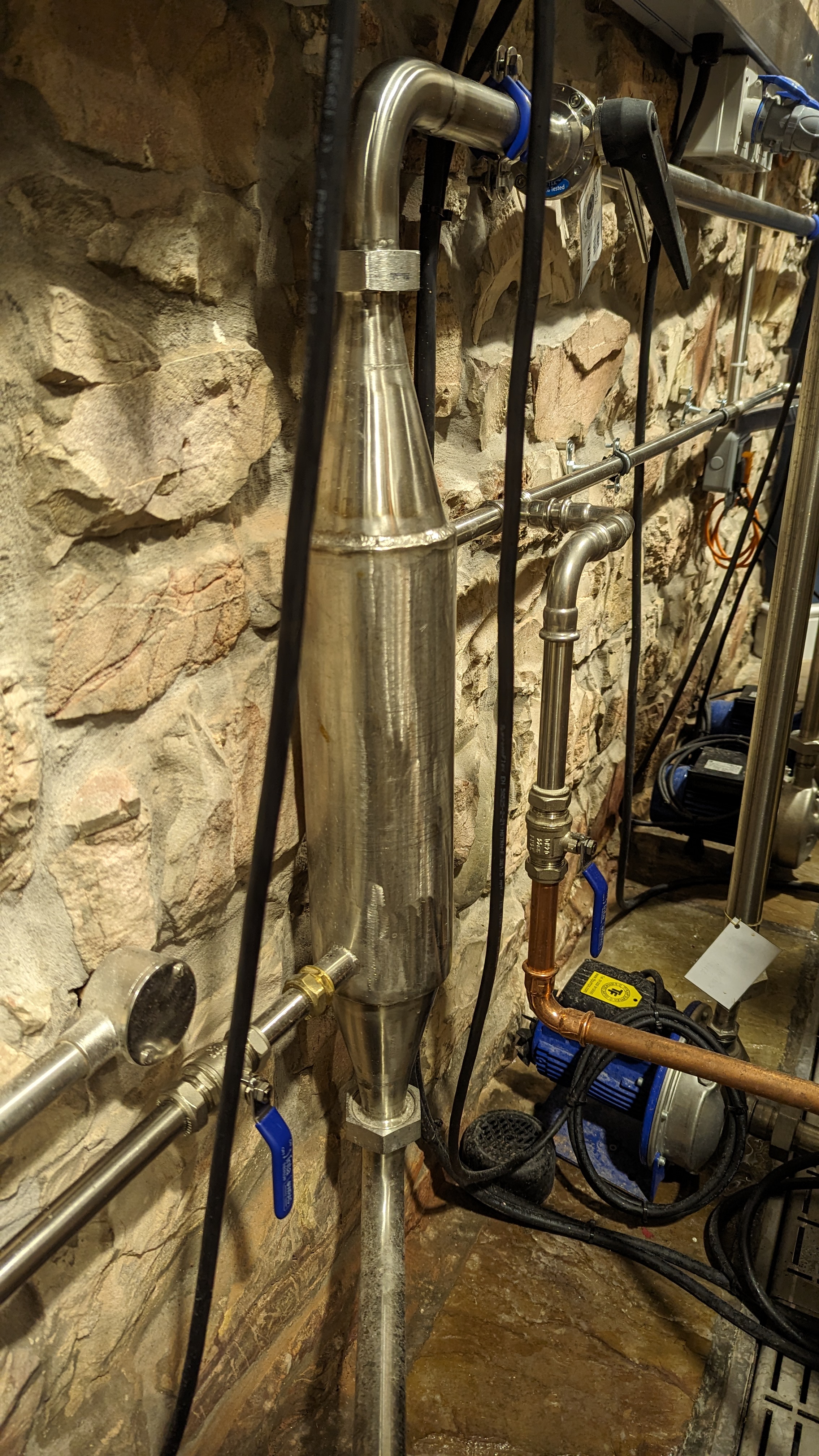
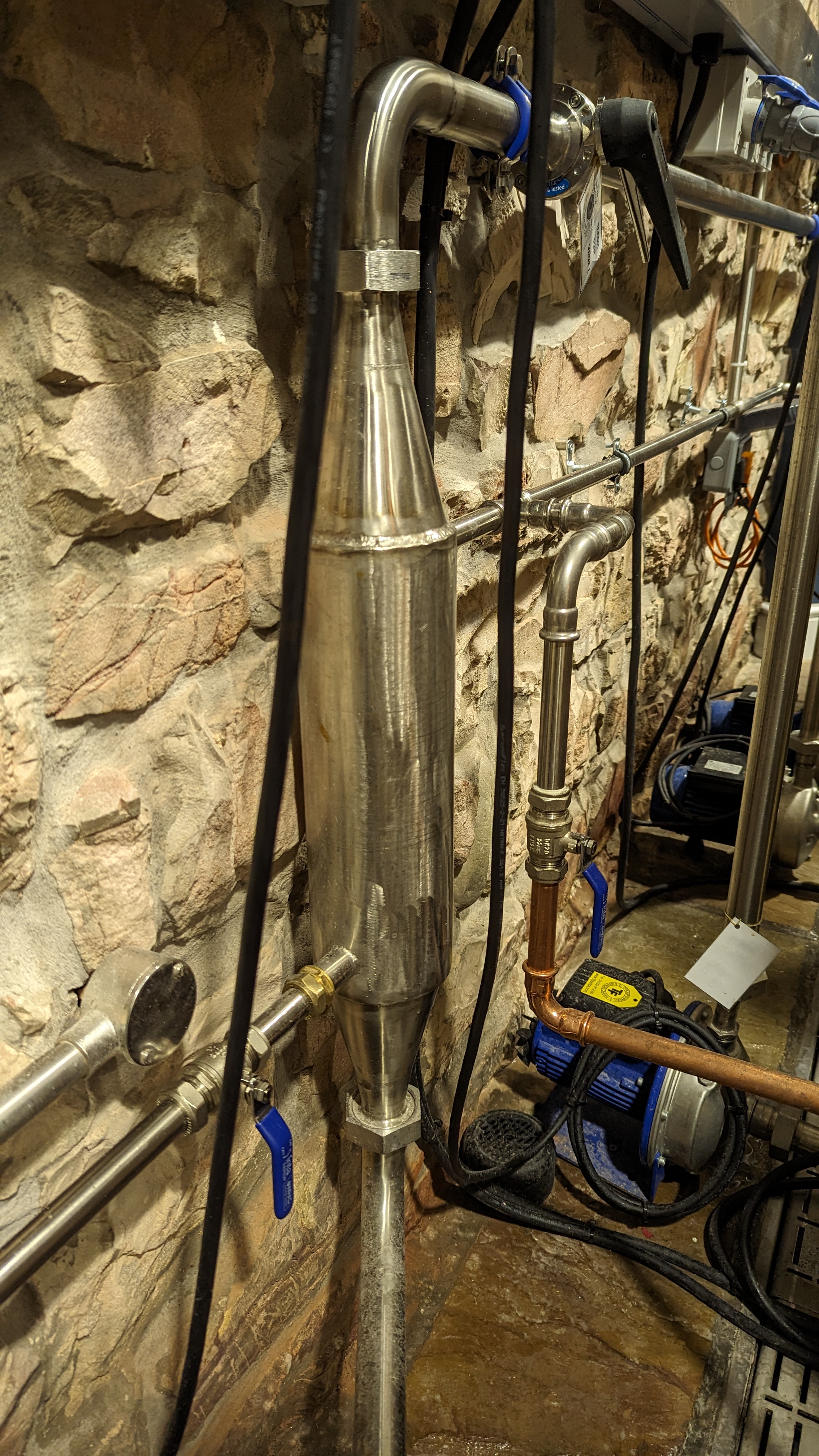
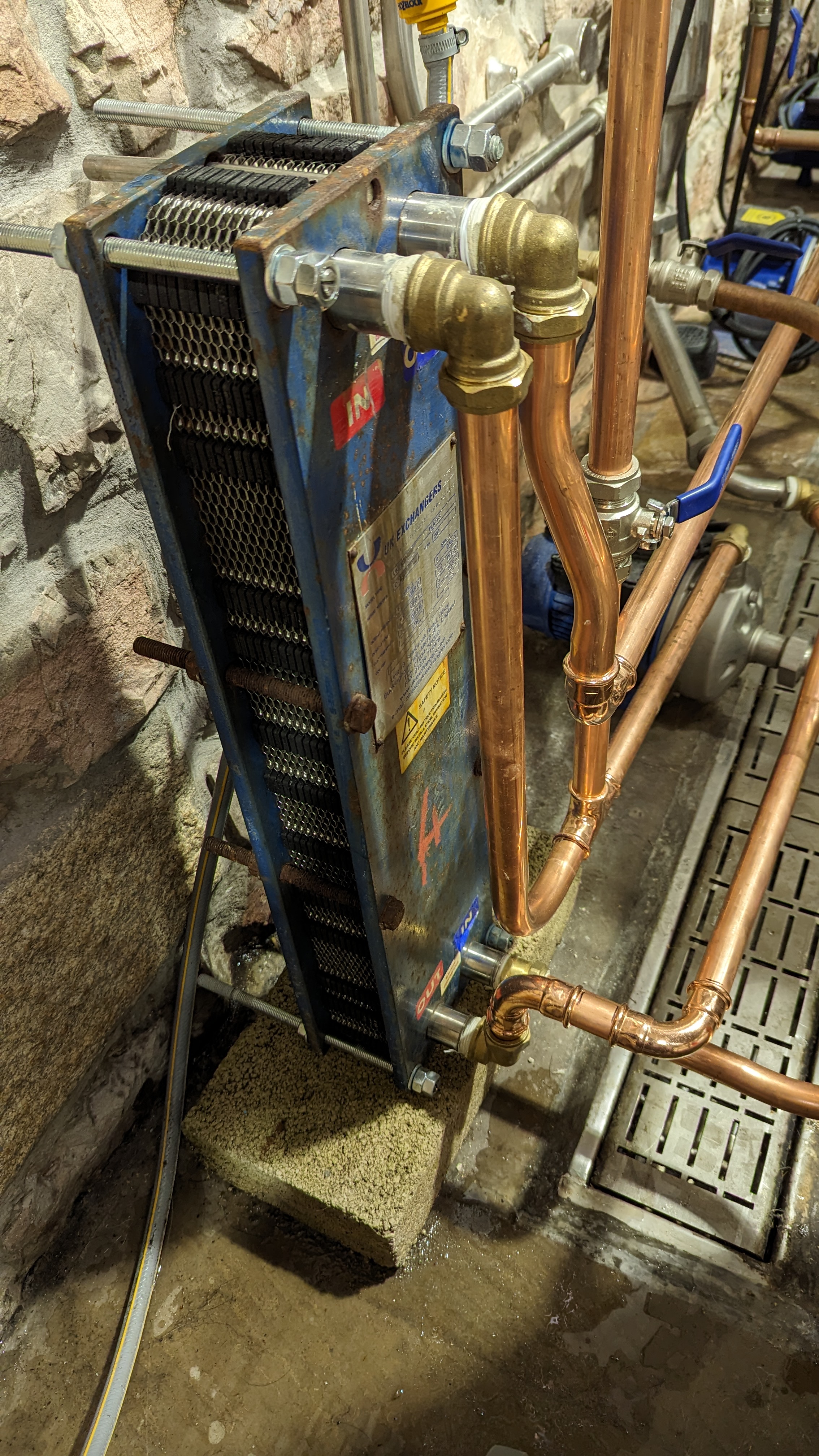
Sadly the heat exchanger which had been installed had not been correctly sized and was simply not capable of cooling the wort from 64-67 C down to the required 25-28 C for fermentation. A quick fix to this was in place when I arrived, in the form of a copper coil in the underback, but this required the wort to be cooled batch-wise to 40 C before it could be pumped through the HX and hit the desired fermentation temperature. This was adding hours to the process time. Through my contacts I was able to get sizing data and source a pre-loved plate HX from a brewery in Essex to enable the wort can be cooled in one pass.

Step 2 – adding recirculation to the mash tun and hot liquor tank (HLT).
PXL_20240422_131713370

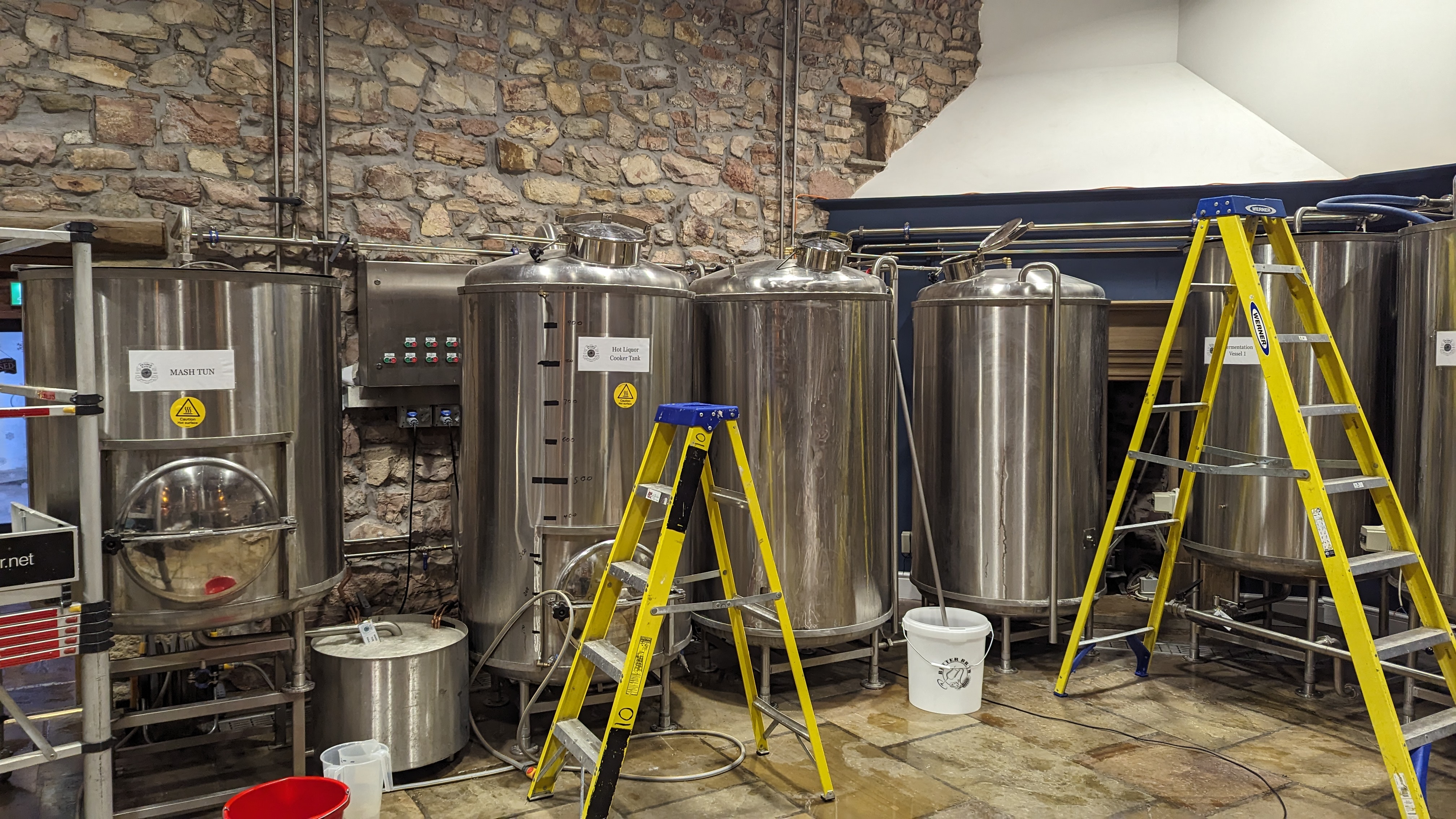
I still remember the guiding words my first Head Brewer gave to me when I started my brewing apprenticeship. He said “The two most important aspects of brewing are cleanliness and temperature control.” Simple advice which I now pass onto anyone that I train. Whilst I found a manual way to mix the HLT in the early days of this project, having recirculation yields an even temperature across the HLT, an important consequence of which is be able to get an accurate measurement of the mash water. Together this means hitting out mash temperature +/- 0.5 C for every batch now This really matters both to yield, quality and process time. With a whisky mash you start running off just as soon as you know the starch conversion is ‘complete’ which is determined using an iodine test. The sooner the starch is converted the sooner you can start running off the strong worts. Achieving the desired mash temperature every time clearly helps.

When I started there was no recirculation facility on the mash tun either, which made this a two man operation with buckets. This is great for your biceps, but is slower and less effective at producing a clear wash than a steady pumped recirculation flow. And as Bradley Wiggins proved in the 2012 Tour de France, winning a race is often about making a lot of small gains, which when added together become significant enough to put you out in front. In addition the manual recirculation method really requires two people, and wash preparation should really be a single person operation.

Step 3 – adding in-line temperature measurement on the chilled wash line

The final change required to make this a single person operation was to add in-line temperature measurement for the chilled wash. Early on, one of us controlled the wash / cooling water flow rates whilst the other monitored the temperature of the wash entering the FV with a thermocouple. Perfectly accurate, but again an unnecessary use of manpower and thus extra cost.

Final position.

Together these changes have reduced the batch time by a massive three hours. The rate limiting step is now getting the HLT for third water up to temperature in time. There is now time for one person to set up a distillation at the start of the day, move over to brewing a batch of wash with time left within a normal working day to shut down and wash the pot ale out of the still, leaving it ready it for the next day.

Before optimising the mash temperature and introducing third water we were seeing brewhouse yields of around 70%. Now they are consistently above 95%. In parallel, the manual effort and man hours of input to achieve this have been grossly reduced since the start of the project. A very satisfying result for everyone.

That completes my three posts on the project to define and optimise a new craft whisky wash process.

Post 1 – The key differences between beer wort and whisky wash manufacture

Post 2 – How process parameters were determined and yield optimised.

This post – How minor equipment changes significantly reduced the batch time.

If you would like help starting a new micro-brewery or distillery, or if you have an existing operation you would like to to optimise wrt time or yield and you are based in the North of England then give me a call.

Maximizing Whisky Yield: Part 2 – Defining the control philosophy and end points

This is the second article about my project to define and optimise the wash production process at a new craft distillery. The first post, covering the differences between beer wort and whisky wash, can be found here.

Why was a new process control method required?

Neither myself not my client had experience of brewing whisky wash at commercial scale, and whilst I had prepared myself by an extensive period of reading and discussions what I found myself with was a fundamental understanding of the biochemistry and a broad-brush overview of the method. What I was missing was practical running details. For example, how to determine the end point of the sparge to consistently yield a wash with the desired gravity (1063). Because a high proportion of strong worts are run off before the sparge (second water) and the temperature of the second water means further sugar formation occurs during the sparge, the reliable calculations one would use for beer wort brewing were not likely to hold. Additionally, because the wort was run off directly into fermenters (FV’s) which did not have the facility for recirculation, it was not easy to get a representative sample of the wash to know it’s gravity either.

What did I devise?

We used the underback as a measuring vessel so that a known number of known volume portions of either strong or weak worts could be run off. Samples of each portion were taken, for the weak worts this was done at the end of each portion and the SG of the portion estimated as the average value between pairs of samples (end of portion N-1 and end of portion N). Since this wort was hot and time was limited, each SG was determined using the density and temperature at point of analysis and a brewing app. algorithm was used to calculate the SG.

I built a spreadsheet to work out the weighted average SG of the combined portions, and during the first few runs we manually mixed the FV and compared the calculated SG to the measured value and found them to be in excellent agreement. This was great news because fully mixing the FV with a hand paddle was hard work.

Once we had three runs worth of data it was clear that this approach was working well. Each complete batch of wash hit the target SG +/- 1 gravity unit. Because we were recording all these data, it was possible to build up a picture of the final SG value of the weak worts run off which would yield the desired 1063 gravity wash.

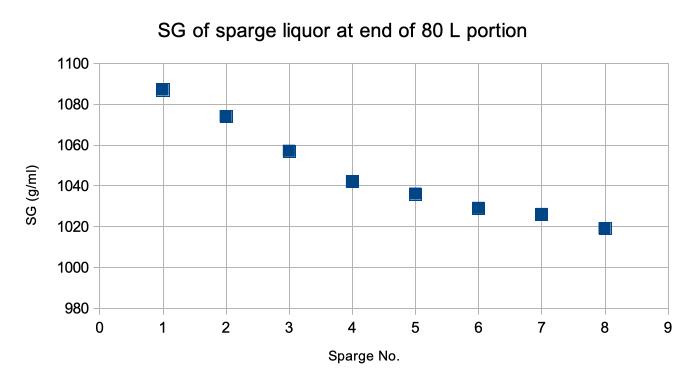
Now we could go on to optimise the initial mash temperature. With this done, we introduced third water*, which boosted the yield to sugar by a further 7-10%. Once the process conditions were stable it was possible to see that the SG at the desired end point of the sparge (second water) was a consistent value. What I did not expect was that the end point of a fresh water mash and third water mash batch would be the same, but this is what our data showed.

Now we had defined a quick ‘on the hoof’ SG measurement of suitable accuracy and an end point gravity to stop the sparge. No longer did we need to take and analysis lots of samples or use a spreadsheet to calculate our final wash gravity. From the data it was possible to plot an SG vs. sparge volume curve. Because we are running a manually controlled process, with a natural product as our raw material, variations in yield from batch to batch are to be expected. As we moved from the commissioning into production stage we had the understanding to be able to grossly simplified the control philosophy:

1. Check the SG of the strong worts was within the expected range

2. Sparge with a known volume just below the lowest volume we had observed to be required.

3. Check the gravity of the weak worts and compare to the sparge / SG curve and from this estimate how much more sparge water would be required.

4. As we got very close to this volume we could check the weak wort SG vs our desired end point, and stop when we reached this.

5. Seal off the FV and prepare for the collection of third water.*

How well did this work?

We now see wash batches within +/- 2 gravity unit of target each time.

The yield to sugar is > 95% for fresh water batches

The yield to sugar for third water batches is 98-110% (counting the input as just the fresh malt)

My contacts in the distilling industry informed me that a brewhouse yield (yield from malt potential to sugar) should be expected to be > 95% so we were very happy with the above results. It was then time to introduce some minor mechanical changes to the plant to reduce the process time. As I explained in the first post it is important to transfer and cool the hot wash quickly to preserve the limit-dextrinase. At the start of my input we ran a forced fermentation test which showed that it was the wort composition which was the reason the early fermentations were not running to completion. Thus, during this initial phase we were, at my advice, adding an exogenous enzyme to the FV to ensure full fermentation to a gravity of 996-1000. The mechanical changes which I implemented, speeding up the wort transfer, are the subject of my next article.

What now?

Would you like someone to help you optimise or start the operation of a new whisky / grain spirit / beer brewing process? If you are based in the North of England I’d be delighted to come and meet you to see if I can add value. Give me a call.

*Third water is an extra hot sparge (85-89 C) to recover any residual sugars from the spent grist. This in turn is used as the mash liquor for the following batch. For more details of this, see my first post.

Maximizing Whisky Yield: Part 1 – Key Differences and Optimization in Wash Production

This is the first in a series of three posts detailing how I worked with a new English whisky distillery to define and optimise their wash production.

Background

In November 2023 I was called by a new craft whisky distillery to help them with two distinct processing problems: stuck mashes and incomplete fermentations. However this soon grew into a project to optimise the yield of their wort production.

PXL_20231208_141206513

Structure

This first post explores the key differences between wort production for beer and wash production for whisky. Both are sugar solutions derived from malted barley but understanding the key differences between the two methods is vital to the quality of the end product.

The second post covers how I defined the process control parameters from scratch using ‘on the hoof’ experimentation on the live process (a skill I developed working in a production based tech support roles in the chemical industry).

The final post (link to follow) looks at changes we implemented in the brewing equipment. What I arrived on the project the brew kit had already been installed, but some minor low cost changes have significantly reduced the process time, which in turn have positively impacted both quality and yield.

Part 1 – What are the key differences between wort (beer) and wash (whisky) production?

Why are the processes different?

The primary driver of whisky wash production is yield. Because the optimal ABV of the fermented wash is around 8.5% ABV, the quantity of available sugar left in the weak worts after the end of the sparge would be considerable if a beer wort method were used – in this case the weak worts at the end of run off would be 1.050-1.055 (approx 140 g/L sugar content). Additionally, it is desirable in beer to have unfermented complex sugars in the final beer to give body and a residual ‘sweetness’. Beer worts typically show an attenuation* of 75-80%. If your aim is to maximise the yield of alcohol per tonne of malt both of these factors would be considered a loss to yield. With whisky production, the optimal yield is 415 litres of pure alcohol per tonne of malt input.

It is always important to remember that the (desired) flavour of whisky is defined by the process by which it has been made. And since the nature of the process was fixed before the underlying consequences on the biochemistry of the process were fully understood it is important to (1) follow traditional methods to give the traditional/desired flavour; (2) understand and manage the shortcomings or “features” of these methods to achieve a consistency of yield to, and quality of final product.

*percentage conversion of sugars to alcohol

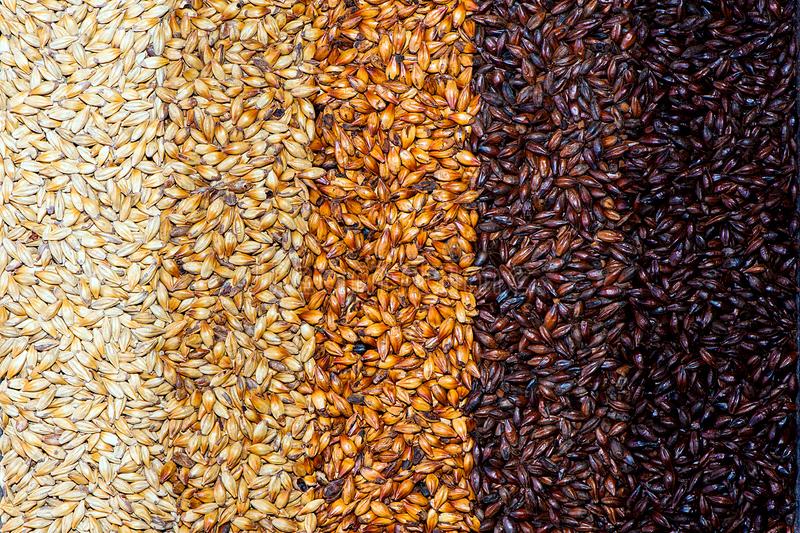
Malt colour-gradientMash temperature

Traditional wash production uses a mash tun, and normally you would think that this would limit you to an isothermal mash. But with whisky wash production a pseudo step mash is carried out by initially mashing at a low temperature (ideally just above the gelatinisation temperature for the quality of malt, which varies by the season). This favours the production of immediately fermentable sugars. It is then sparged at 75 C to both wash out the sugars already formed and also to raise the mash temperature to activate alpha-amylase thus form and extract complex sugars also.

Run off method

To maximise sugar extraction during sparging, most of the strong worts are run off before the sparge is started. Often the liquor:grist ratio is higher in wash production which means there is more volume to run off. This step needs to be carefully designed to avoid running off too much liquor which could lead to a stuck mash.

No wort boil

Wash is run off directly into the fermenter, it is not boiled. There are a number of consequences to this:

  • Lactic acid bacteria (LAB), present on the surface of all barley malt remain viable and active in the fermenter – they are not denatured by a boiling stage. This needs to be accounted for (see below)

  • In a well run process, active enzymes – amylases but also importantly limit-dextrinase – transfer with the wash into the fermenter

  • Because the wash has not been boiled (which causes vigorous mixing) or recirculated in the copper the wash in the fermenter cannot be directly sampled to gain a representative sample for SG / OG control.

These consequences all need to be managed if you are to achieve product consistency and high yield.

PXL_20231208_141217173

Managing lactic acid bacteria (LAB).

As soon as the wash is formed, LAB start acting on the maltose to form ethyl lactate. Because they convert sugars which could form alcohol this can have an economically significant effect on the yield. For this reason, yeast is pitched into the strong worts, early in the transfer into the FV. The aim is for the yeast to out compete the LAB and minimise losses of sugar to ethyl lactate at the start of the fermentation.

The fruity flavour imparted by ethyl lactate is an important characteristic of whisky so careful management of the fermentation is required to ensure that the level is consistent from batch to batch. At the end of the yeast fermentation, LAB are able to metabolise other oxygenates, such as malic acid to form ethyl lactate. To ensure flavour consistency the length of time that the fermentation is left to stand post completion of yeast action needs to be controlled. It is normal in small scale whisky production for multiple batches of wash to be required to fill one cask with spirit. Because of the impact of five day working not usually possible to allow every fermentation to run for the same length of time, and from this come the terms ‘shorts’ and ‘longs’ describing wash fermentations which have been been completed and distilled within the week or run for longer over a weekend. Each cask of spirit should contain the same proportion of shorts and longs and thus production should run to a regular pattern each week.

Malt enzymes in the fermentation

It is essential for the enzyme limit-dextrinase (from the malt) to remain present and active in the fermentation. For this to happen, the time that the wash remains hot post saccharification needs to be minimised i.e. you need to run off and cool the wort as quickly as possible once starch conversion is complete. It is this enzyme which breaks down the unfermentable sugars in the wash into fermentable sugars which allows a far higher attenuation by the yeast. A typical whisky wash has an OG of 1063, without limit-dextrinase the fermentation would end at an SG of around 1013, with it present the fermentation continues to an SG of 996-1000.

Wash SG control

Ideally the FV (often called a wash back) needs to be able to be recirculated so that the wash gravity (SG) can be accurately measured and controlled, at very least during process commissioning. Remember that wort gets progressively weaker during its transfer, and thus the FV is stratified ‘by design’ and thus non-homogenous. Recirculation could not easily be retro-fitted to the kit I was working on, so I developed and proved an alternative method which I will discuss in my next post.

3rd water

Once all the wash has been collected, the mash bed is sparged again, at a higher temperature still, and this liquor is used for mashing the next batch of malt. This liquor is called 3rd water.

  • First water – liquor used to mash the grist.

  • Second water – sparge liquor sent forwards to the FV.

  • Third water – second sparge liquor containing residual sugars, recycled into the following batch.

In a large distillery, the 3rd water is likely to be used within the hour. In a craft distillery it is likely you will only be making one or two batches of wash per day so you need want to hold some of your 3rd water overnight. What is key here is to keep it above 70 C so it remains free of the effects of bacterial or wild yeast contamination. However, for anyone familiar with smaller scale brewing you know you want your mash water at or close to strike temperature (usually 70-74 C) at the start of the day anyway so it is normal to heat it to 10 C above this the night before knowing it will come in about right the next morning in a well insulated hot liquor tank.

Whisky Galore! Boosting the yield of wash production for a whisky client

PXL_20231208_141206513

A new whisky distillery has opened near to me, so I got in touch to see if they wanted anyone to help making their wash. The owner got back to me the next day to ask if I could help with issues with stuck mashes and slow fermentations.

What might not be obvious to anyone new to the field is that the precursor to whisky spirit is something very akin to beer, but without any hops. I always offer the first hour of consulting time free so I can decide if I can add value for the customer and they can get confidence in the knowledge which I offer. We were soon having a fruitful conversation and the reason for their slow / stuck fermentations became obvious after running a forced fermentation test – they had the wrong mix of sugars in their wort (or wash as it’s called in this industry). Could I help to resolve this? Could I optimise their yield to sugar in the wash and could I advise on best practice CIP methods? Yes, yes, yes!

The benefit of employing someone like me is that my Ph.D background allows me to get up to speed in a new topic in hours, not weeks. Understanding the subtle but important differences between wort and wash production made for fascinating reading. In beer production we choose the mash temperature to control the sweetness and body of the final beer, with whisky one is looking to maximise fermentable sugar extraction. To achieve this the grist is mashed at low temperature, almost all the strong worts are run off and then it is subject to a kind of pseudo step mash by sparging at 75 C to activate the α-amylase to convert areas of the starch which are sterically inaccessible to the β-amylase. But since non-fermentable sugars are of little value to the whisky maker, the wort is not boiled but (cooled and) transferred directly from the mash tun to the FV. Here speed of operation is key because the aim is to transfer active enzymes, including limit-dextrinase, into the FV. As the fermentation progresses these enzymes work on the complex sugars to form maltose which can then be converted to alcohol. Thus efficient operating practices will boost the yield to alcohol.

By observation it was clear that the HX (heat exchanger) which had been installed was far too small which was increasing processing times.

PXL_20240104_154525690

A new HX is now on order, but in the mean time it was important to get production running. Employing a trick to make Brut IPA I advised on an exogenous enzyme we could add to the FV to allow the fermentations to run to completion whilst the new HX is awaited. Roll on two weeks and all fermentations are now reaching their desired terminal gravity and I have given hands on help and coaching which has boosted the sugar extraction yield from 67 to 93% and I aim to increase this still further.

Now my role has moved on to training the guys who are going to be running the brewing side of the process, write some SOP’s (best practice training is always based on an SOP) and help embed consistency of operation and thus yield and flavour profile. It is really satisfying to use my process support skills from my time in the chemical industry in parallel with my technical understanding of the biochemistry of brewing to help yield good consistent spirit in good yield. I must confess to be rather enjoying myself.